Activation-code setup
Power on the Beacon, log in to SignalCost, and enter the activation code shown by the unit. SignalCost ties that device to the right company and office.
Review office AI locally, apply company rules before provider use, and keep sensitive checks inside the office when your privacy setting requires it.
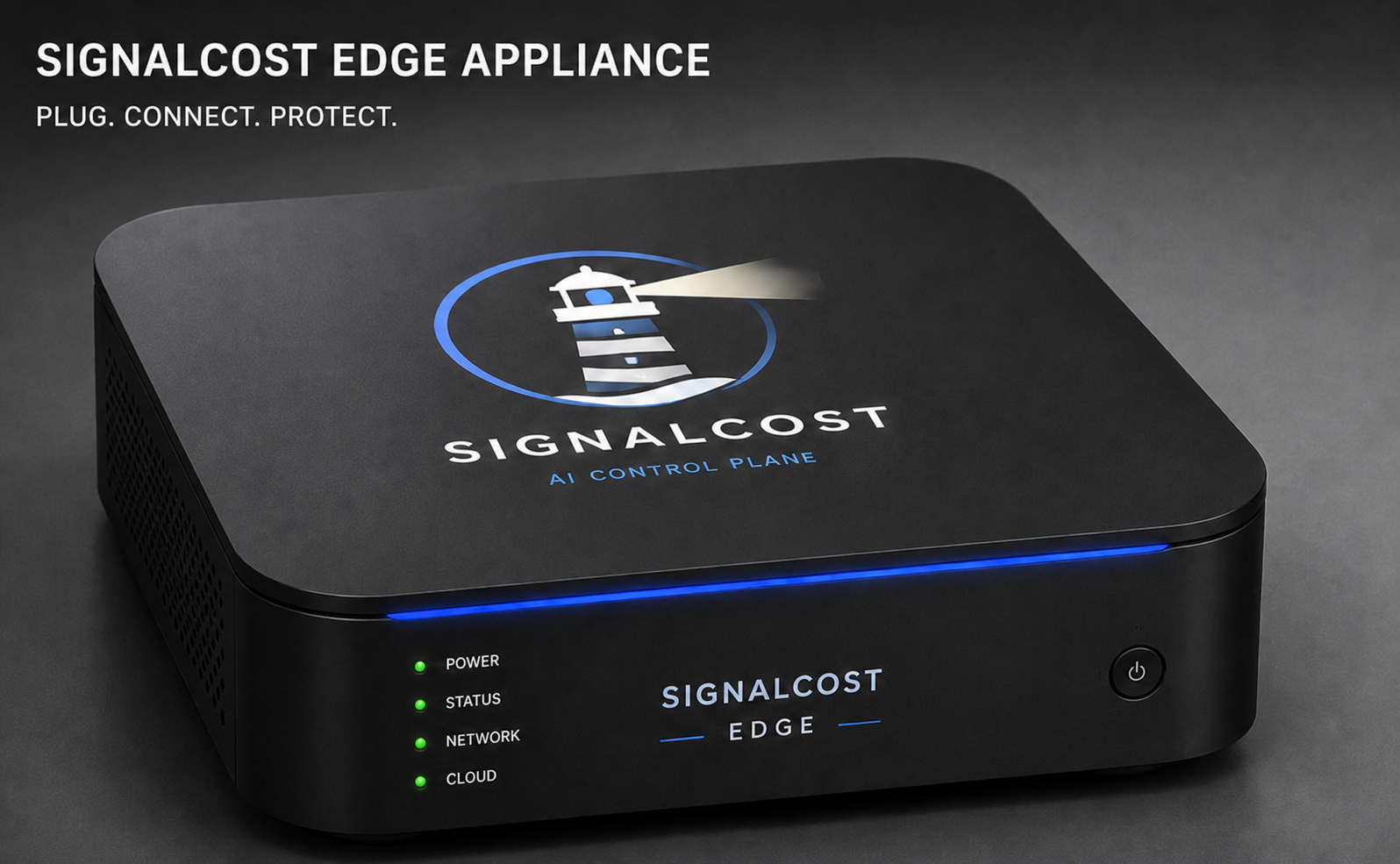
Reserve Beacon when you want simple local AI controls for an office, branch, or customer site without asking employees to change how they work.
Both versions answer the same business questions: who is using AI, what work it supports, whether it should be allowed, where it should run, what it costs, and what proof should be kept.
Power on the Beacon, log in to SignalCost, and enter the activation code shown by the unit. SignalCost ties that device to the right company and office.
Beacon exposes the same capture source choices as Cloud: native browser capture, endpoint, SDK, MCP, OpenTelemetry, and local Beacon capture. Install the source that matches the traffic your team already uses.
Beacon can review the request in the office first, decide whether it fits company rules, and only then allow approved AI use.
Beacon turns local evidence into detected, observed, and connected provider states. Network enforcement is available as an optional advanced control after capture is working.
SignalCost shows which offices are active, which policies are installed, whether updates are current, and whether the local dashboard is healthy.
Every provider moves through a clear state so teams know what SignalCost can prove now and what an integration would add later.
No credentials required.
Enough evidence to report.
Account access stays separate.
Choose Add billing or routing integration only when the workspace needs invoices, exact account reconciliation, provider routing, model catalogs, or enrichment.
See provider coverageToken counts show volume. SignalCost shows what the spend was for, what should happen next, and whether it paid off.
Capture AI activity and connect it to the people, tools, and business purpose behind it.
Apply policy, budget, privacy, and quality rules before spend compounds.
Reconcile cost with outcome evidence before expanding to more teams, tools, or locations.
No. Beacon is the office device. SignalCost Cloud still manages your account, policies, reports, billing, support, and device list.
Beacon keeps the latest approved rules locally and follows the fallback choice your company sets: keep running, stop risky requests, or stay local-only.
Beacon is designed so a small office can start without a custom IT project: plug it in, enter the activation code, start local capture, and install the native browser or managed source that fits the office. Add provider credentials later only when billing or routing requires them.
No. Capture and provider discovery work without a proxy, browser certificate, or router change. Add optional router, DNS, inline, or proxy enforcement only when the company needs direct-provider bypass controls.
Beacon can make the sensitive decision inside the office while SignalCost receives the business record needed for reporting and audit.
Beacon detects the local router, DNS, and Beacon address so offices get a clear recommended path instead of a custom networking project.
Add devices by office, branch, or customer while keeping each site’s rules, reports, and evidence separate.
Cloud and Beacon are different ways to deploy the product. Provider coverage, capture sources, rules, costs, approvals, reports, and audit records stay consistent.
Create a workspace, install capture, review provider coverage, add optional integrations, set business rules, and manage AI spend without requiring Beacon hardware.
Start with Cloud. Add Beacon One when an office needs local control.